
 FR
FR
 Sign In



 Done!
Done!





 Link copied
 Share via Email
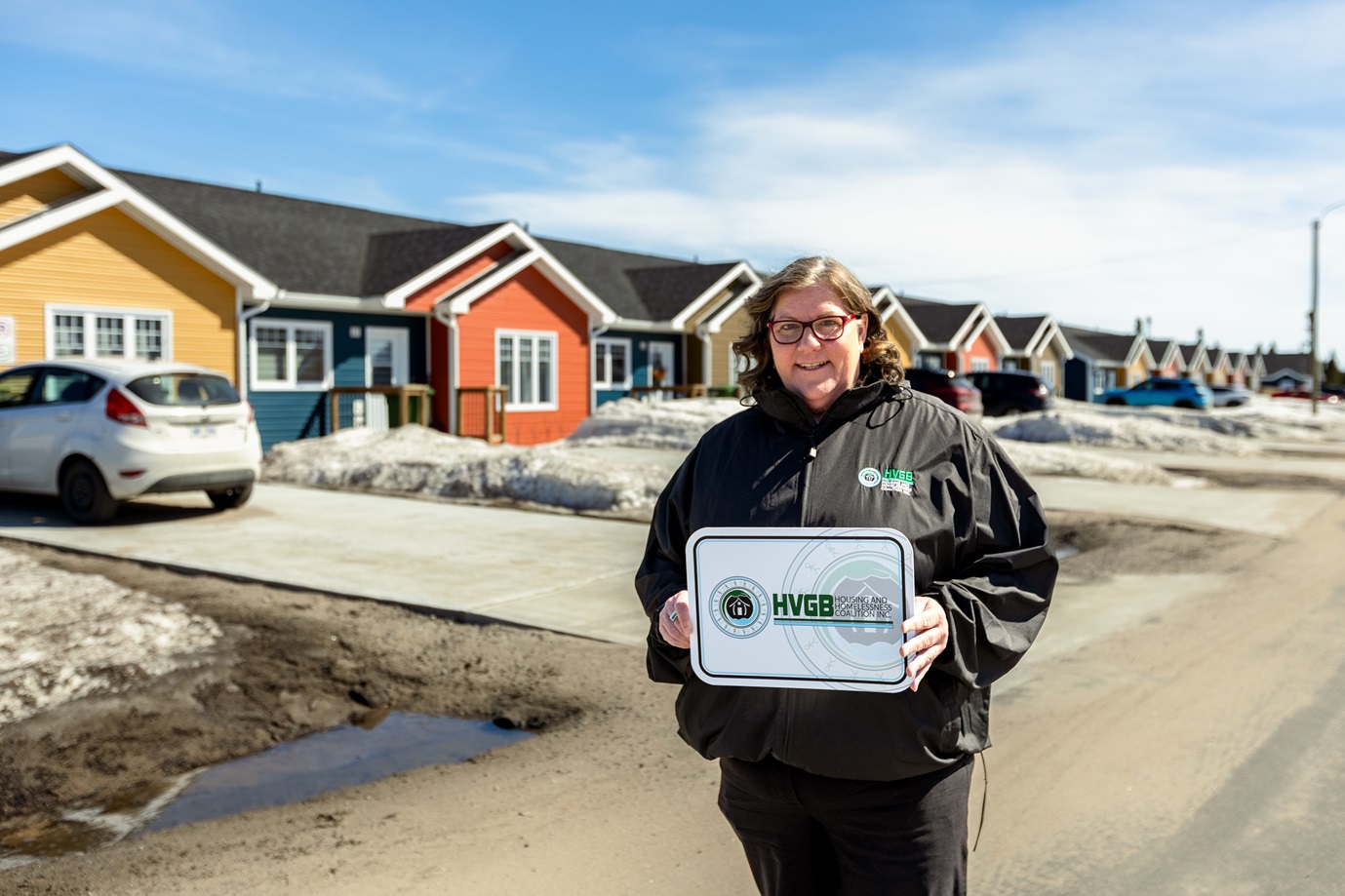
AT A GLANCE
- New 32-unit seniors project balances independent living with social connection and provides a safe, secure, affordable environment for seniors to age in place.
- The project responds to significant and urgent housing needs in Happy Valley-Goose Bay identified in a 2022 assessment.
- The development integrates Indigenous knowledge into programs and services, including Labrador’s first forest healing garden.
“I’m a bit of a go-getter,” says Jackie Compton-Hobbs, executive director, Happy Valley-Goose Bay Housing Coalition.
Late last year, together with partners, stakeholders and community supporters, the coalition opened the doors to 32 independent living apartments for seniors. The development is the first of its kind in Happy Valley-Goose Bay. A seniors supportive housing project is being discussed, and a hospice is also on the horizon. Together, the projects support the coalition’s vision for a complete continuum of care for seniors in the region.
Closing a housing gap
Happy Valley-Goose Bay is a town of just over 8,000 people at the western end of Lake Melville in Central Labrador, near the Churchill River. According to the 2021 census, nearly half of its residents are Indigenous, including Inuit, Métis and First Nation peoples. The town’s economy includes public services, transportation and logistics, and connections to regional resource industries. It’s also home to Canadian Forces base, 5 Wing Goose Bay and serves as a regional service hub for Central Labrador and surrounding communities.
Like many small communities, limited housing supply, a growing population and aging housing stock have resulted in high housing costs and limited options for many residents.
Longtime housing advocate Jackie Compton-Hobbs and her team are working to fix this. In 2022, Jackie was chair of the town’s housing advisory board. With support from colleagues, housing advocates and the board of directors, she helped to transform the board into an incorporated non-profit organization, paving the way for funding opportunities.
The Indigenous-led Happy Valley-Goose Bay Housing and Homelessness Coalition was among 4 organizations that took part in a Housing Needs Assessment. Coordinated by The Labrador Friendship Centre, the report revealed that seniors are among the groups most in need of affordable housing and support services.
“Many seniors are living in homes that no longer meet their physical needs,” says Jackie. “Remaining in these homes is often no longer practical, whether due to cost or the challenges of maintaining them. It can also put seniors at risk of isolation and housing insecurity.”
A few supportive living options were available, but there was nothing to support seniors in search of independent living or aging in place. The coalition set out to close this gap.
Shovel-ready lots
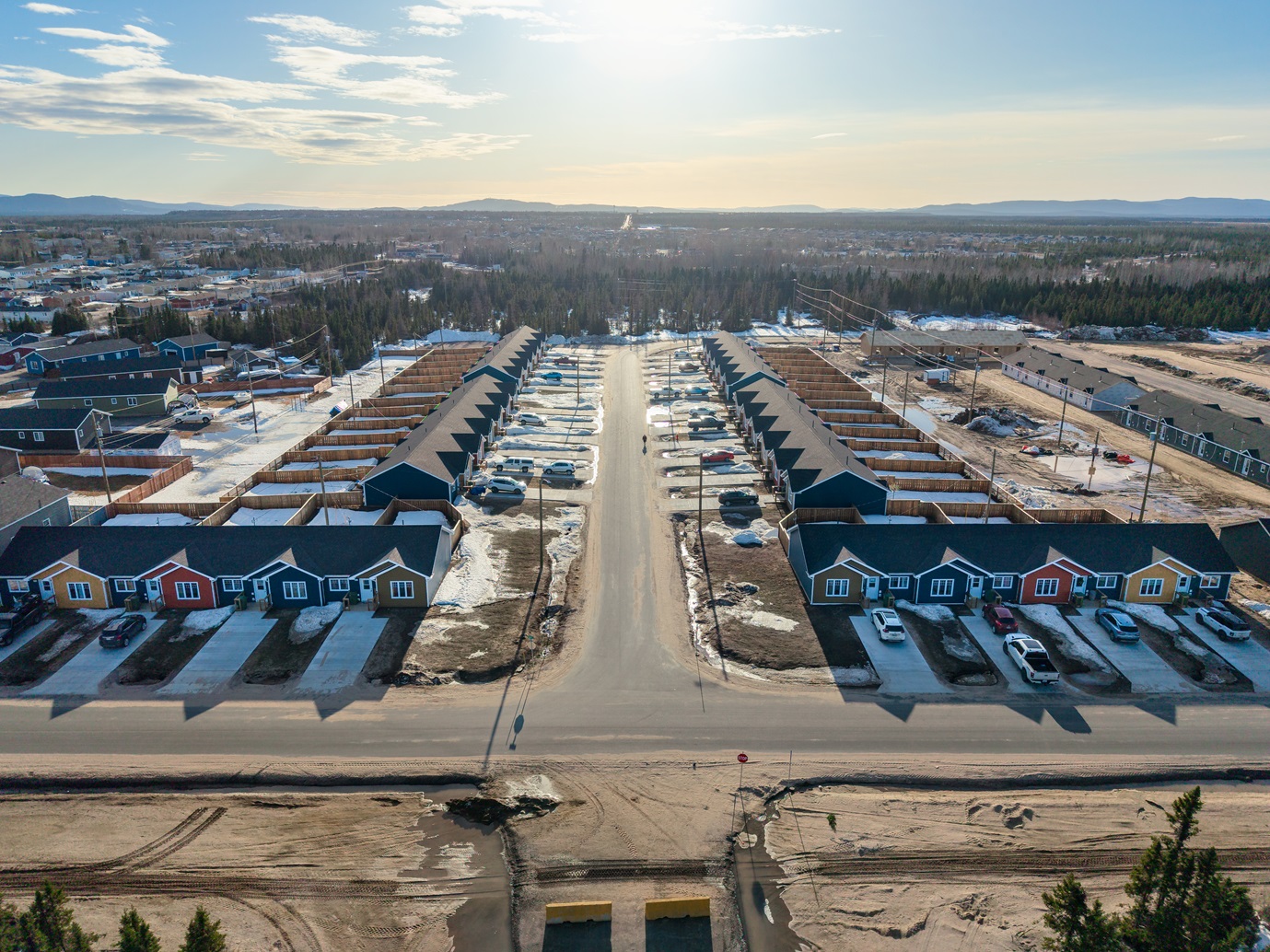
In selecting a location for the seniors development, the coalition prioritized a peaceful, nature-connected setting with easy access to the centre of town. The site’s capacity to support multiple projects was also key.
Happy Valley’s new West of Hefler subdivision proved ideal. And Jackie had a working relationship with the developer.
“We worked on a couple of other projects like Habitat for Humanity and other areas in the community,” says Jackie. “I said, you know, you got all that land up there…what an opportunity to build some seniors housing.”
Jackie says the developer was “right on board.”
The coalition secured 32 lots and swiftly assembled a core team including the developer, project advisor, contractor and engineer.
Working with government funders, community partners and industry advisors, the coalition developed a concept for more than a project—they wanted a community where seniors could thrive, connect and grow.
As the project progressed, “Partnerships were essential,” says Jackie.
Government partners helped to process permits and applications, while local suppliers provided resources and expertise. Community organizations supported the broader vision of creating safe, inclusive housing options for seniors.
Thoughtful design
Each unit is approximately 900 square feet and features 2 bedrooms, 1 bathroom and ample space for seniors to live comfortably and host family members.
Each unit is thoughtfully designed to meet the needs of seniors, offering:
- barrier-free layouts for easy mobility
- dedicated front and back doors for added privacy and convenience
- proximity to essential services, including healthcare, pharmacies and grocery stores, all within walking distance
Promoting connection, reducing isolation
On-site services and supports include a shared space where residents can gather, cook and take part in programs and workshops designed to promote connection and reduce isolation.
“Our plan is to offer programs like craft day, bingo day, presentations for mental health, things like that,” says Jackie.
Within a few steps of their front doors, residents can access a healing forest garden with a walking trail and outdoor recreation equipment.
“It’s the first healing forest garden ever developed in Labrador,” says Jackie.
The 1.3-kilometre walking trail includes an Indigenous gateway, as well as a gazebo and benches.
The goal is to bring residents closer to nature and encourage physical activity and well-being.
Plans are underway for a greenhouse where residents can grow plants and vegetables, as well as a rock garden and butterfly release garden.
Jackie predicts that together, these features will be “a big hit.”
Creating housing opportunities
The units were completed in 2025 and applications filled almost immediately.
The residents quickly settled in and adapted to their new surroundings.
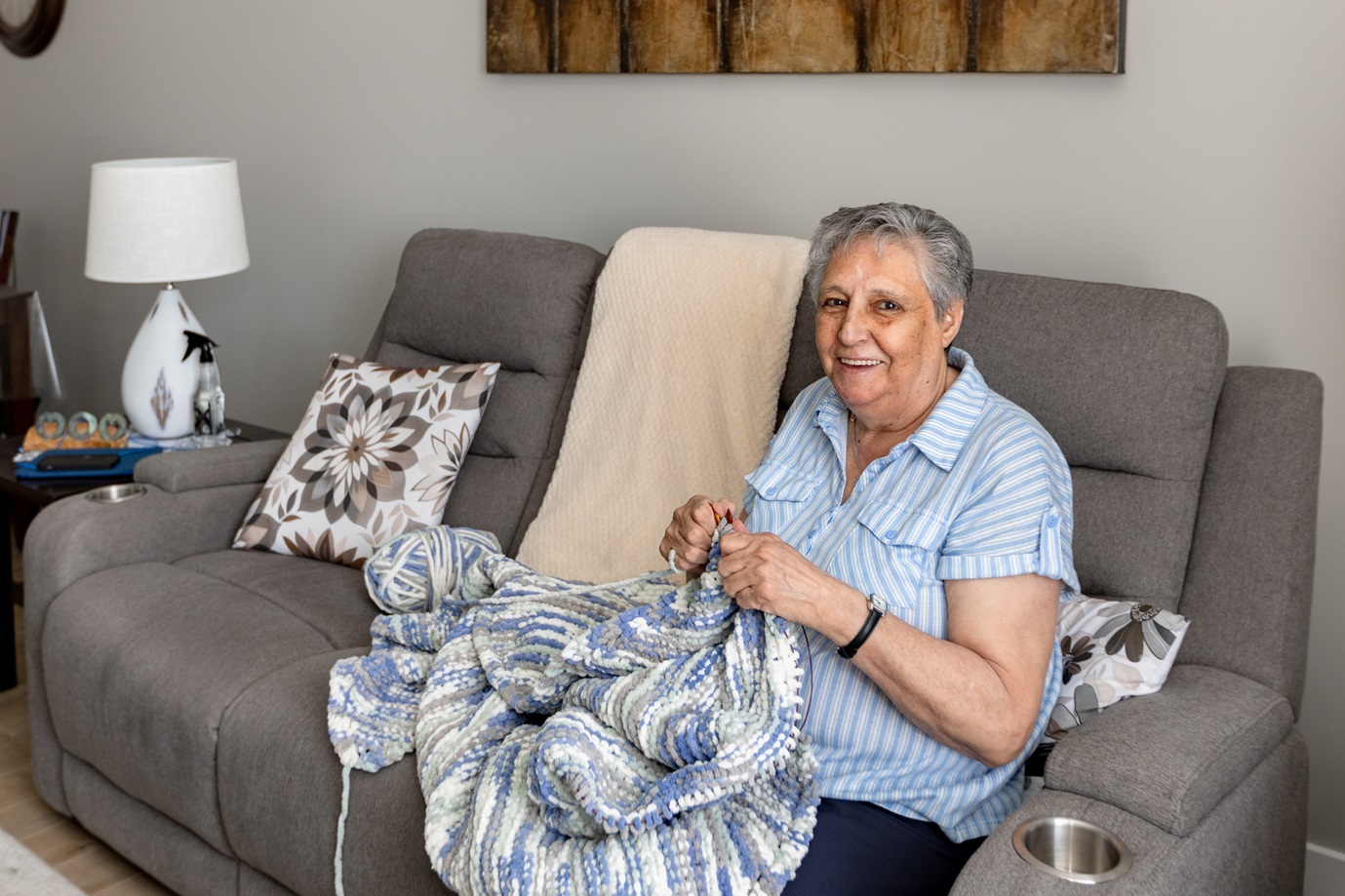
“I've heard nothing but positive, happy, excited seniors,” says Jackie. “One guy said to me, if my health was as good as this apartment, he said, it'd be all right. I got no issues.”
The affordability of the units has also been well received.
New resident Linda was paying considerably more rent in her previous home, and utilities were on top. Safety and security were also a concern. Among the things she values in her new home are privacy and “peace of mind.”
Before moving in, some seniors sold their homes, which were then purchased by younger residents.
“It opened up housing opportunities within the [wider] community,” says Jackie.
Lessons learned
From funding applications to environmental assessments and energy modelling, “What I would take away is this is a lot of work,” says Jackie.
Her recommendations for anyone looking to create a similar project:
- Create a dedicated team to assist with funding applications.
- Have funds available to bridge the gap until applications are approved. Operational dollars are also helpful.
“You can't just run with it. It’s all the other costs that come with it…property tax, insurance, maintenance materials.” - Whether choosing ramps and doorsteps or a concrete versus wooden deck,
a little bit of construction knowledge goes a long way.
Powered by purpose and community
The development marks the first step towards the coalition’s long-term plan.
A few years ago, Jackie invited a representative from the philanthropic investment organization North Pine Foundation to visit Happy Valley. After touring the land, the foundation backed the continuum-of-care vision with funding that helped the coalition leverage additional support for a seniors supportive housing project.
“I'm a bit of a go-getter,” says Jackie, holding up the floor plan for the 20-unit project.
“We already know that if we had a supportive housing project here today, we could transition seniors out there that need level 1 and 2 care.”
A hospice has also been discussed, complementing a complete community-focused approach that supports seniors across a range of needs and levels of care.
At its core, the plan is about community.
“Up here after a snowfall, you see seniors out shovelling driveways,” says Jackie. “…neighbours helping neighbours and having a chat — that’s exactly the kind of community we want for our seniors.”
KEY FACTS
- The Happy Valley-Goose Bay seniors development received support from the Affordable Housing Fund. The fund provides low-interest and/or forgivable loans or contributions to partnered organizations for new affordable housing and the renovation and repair of existing affordable and community housing.
- The Happy Valley-Goose Bay Housing Coalition is an Indigenous-led non-profit organization. The coalition’s mission is to eliminate homelessness by developing awareness, supporting quality and safe housing opportunities. It fosters collaborative solutions in Happy Valley-Goose Bay through a Housing First approach.
- The 2022 Housing Needs Assessment steering committee included Labrador Friendship Centre, Happy Valley-Goose Bay Housing and Homelessness Coalition, Labrador Affairs Secretariat and Newfoundland and Labrador Housing Corporation.