
Professionals Consumers Housing Observer About
Skip to content
CMHC Home Canada Mortgage
and Housing Corporation
  • FR
  • Sign in photo Sign In
  • Insurance and Securitization

    • Homeowner and Small Rental Insurance
    • Multi-Unit Insurance
    • Securitization
    • Claims, Defaults and Risk Management

    Tools and Comparison

    • Calculating GDS/TDS
    • CMHC Default Management Tool Selector
    • How to Recognize and Report Mortgage Fraud
    • NHA Approved Lenders

    Housing Programs

    • Apartment Construction Loan Program
    • Housing Accelerator Fund
    • Federal Lands Initiative
    • View all housing programs

    Contact Us

    Contact details for mortgage loan insurance, underwriting, business development and real estate.

    Learn More

    NHA Approved Lenders

    Institutions approved to lend, underwrite and/or administer CMHC-insured loans.

    Learn More
  • Housing Themes

    • Housing Demand and Supply
    • Housing Finance
    • Indigenous Housing
    • Building Innovation
    • Housing Policies and Rules
    • Rental Markets and Vacancy Rates
    • Affordable and Non-Market Housing
    • Housing Needs and Conditions

    Research and Analysis

    • Housing Market Outlook
    • Housing Supply Report
    • Residential Mortgage Industry Report
    • Rental Market Report
    • Northern Housing Report

    Data and Statistics

    • Residential Mortgage Industry Data Dashboard
    • Canadian Housing Survey Data
    • Household Characteristics Data
    • Rental Market Data

    Reports Calendar

    Find out when we’re releasing our latest housing reports.

    Learn More

    Residential Mortgage Industry Report Spring 2026

    Highlighting mortgage trends, lender activity and housing finance insights to support informed decisions for stable, affordable markets.

    Learn More
  • Professionals
  • Consumers
  • Housing Observer
  • About
Housing Finance Solutions
  • Homeowner and Small Rental Insurance
  • Multi-Unit Insurance
  • Securitization
  • Claims, Defaults and Risk Management
  • Calculating GDS/TDS
  • CMHC Default Management Tool Selector
  • How to Recognize and Report Mortgage Fraud
  • NHA Approved Lenders
  • Apartment Construction Loan Program
  • Housing Accelerator Fund
  • Federal Lands Initiative
  • View all housing programs
Housing Expertise
  • Housing Demand and Supply
  • Housing Finance
  • Indigenous Housing
  • Building Innovation
  • Housing Policies and Rules
  • Rental Markets and Vacancy Rates
  • Affordable and Non-Market Housing
  • Housing Needs and Conditions
  • Housing Market Outlook
  • Housing Supply Report
  • Residential Mortgage Industry Report
  • Rental Market Report
  • Northern Housing Report
  • Residential Mortgage Industry Data Dashboard
  • Canadian Housing Survey Data
  • Household Characteristics Data
  • Rental Market Data
FR
  • Solving housing affordability together
  • Canada Housing Research, Data and Insights
  • Deferrals of Insured and Uninsured Mortgages
  • Save
  • Share
Save Icon

SAVE TO MY FOLDER

Deferrals of Insured and Uninsured Mortgages

SAVE
Close this Window   |   Manage my Folder
Save Icon

SAVE TO MY FOLDER

Deferrals of Insured and Uninsured Mortgages

Done Done!
Close this Window   |   Manage my Folder
Share icon

Share via

  • Facebook
  • LinkedIn
  • Mail
  • print
  • CopyLink

SuccessCopyLinkVersionLink copied

Share icon

Share via

  • Facebook
  • LinkedIn
  • Mail
  • print
  • CopyLink

SuccessCopyLinkVersionLink copied

share icon

Mail-blue Share via Email

Did You Know?

You can include an email signature?

Register | Sign In

×
Google Captcha Loader
share icon

Mail-blue Share via Email

Done Done!
Close this window

Deferrals of Insured and Uninsured Mortgages

An analysis of deferrals of insured and uninsured residential mortgages using Equifax Canada data.

Show Guide Chapters
  • Mortgage Deferral Series
  • Deferred Mortgages by Borrower’s Employment Industry
  • Duration of Mortgage Deferrals
  • Consumer Debt Deferrals by Lender Group
  • Consumer Credit Scores and Mortgage Deferrals
  • Deferrals of Insured and Uninsured Mortgages

This analysis examines deferrals of insured and uninsured residential mortgages. The data is from the credit rating agency Equifax Canada, and is as reported to that agency.1 The data covers approximately 80% to 85% of the Canadian market for residential mortgages and includes both insured and uninsured mortgages.

Highlight of findings

  • Payment deferrals on consumer debt peaked in June 2020. At that time, 18.7% of the insured and 15.9% of the uninsured mortgage balance was in deferral.
  • Of the mortgage balance in deferral, 33.8% was insured, and 66.2% uninsured. The average loan size of uninsured mortgages in deferral was about $35,000 higher than the average for insured mortgages.
  • Some consumers who deferred mortgages also deferred other consumer debt, such as credit cards and HELOCs.
  • As at March 31, 2021, deferred mortgage and non-mortgage consumer debt had decreased by over 95% from its peak in June 2020.

Since the beginning of the COVID-19 pandemic, payment deferrals on consumer debt peaked in June 2020. As at June 30, 2020, the following mortgage balances were in deferral:

  • 18.7% insured
  • 15.9% uninsured

Of the mortgage balance in deferral, 33.8% was insured and 66.2% uninsured. In figure 1,

  • the average outstanding balance of insured mortgages in deferral was $248,687. This was 20.6% higher than the average balance of insured mortgages that were not in deferral.
  • the average outstanding balance of uninsured mortgages in deferral was $283,313. This was 32.9% higher than the average balance of uninsured mortgages that were not in deferral.

Figure 1. Average outstanding balance of mortgages in deferral was higher than those not in deferral
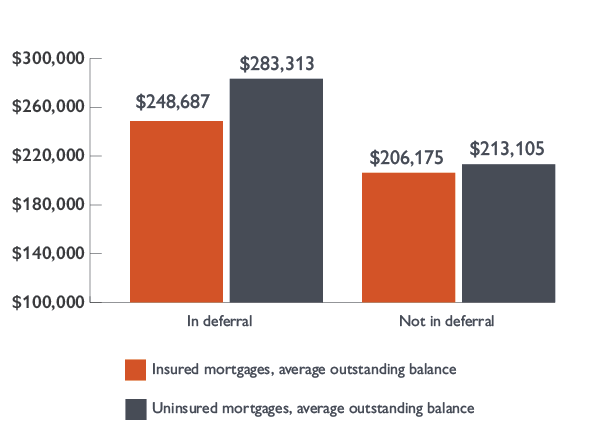
Figure 1. Average outstanding balance of mortgages in deferral was higher than those not in deferral
In deferral Not in deferral
Insured mortgages (average outstanding balance) $248,687 $206,175
Uninsured mortgages (average outstanding balance) $283,313 $213,105

Source: CMHC calculations using Equifax Canada data

The share of insured and uninsured mortgages in the total outstanding mortgage balance varied by region. So did the deferral rate, calculated as the mortgage balance in deferral as a share of the total outstanding balance. Figure 2 shows the deferral rates for insured and uninsured mortgages as at June 30, 2020. The deferral rate was higher for insured mortgages in all the provinces and territories, except Ontario.

Figure 2. Share of balance in deferral for insured and uninsured mortgages varied by province and territory
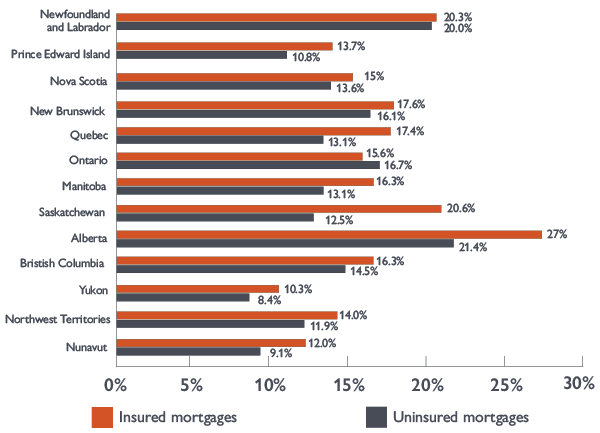
Figure 2. Share of balance in deferral for insured and uninsured mortgages varied by province and territory
Geography Insured mortgages Uninsured mortgages
Newfoundland and Labrador 20.3% 20.0%
Prince Edward Island 13.7% 10.8%
Nova Scotia 15.0% 13.6%
New Brunswick 17.6% 16.1%
Quebec 17.4% 13.1%
Ontario 15.6% 16.7%
Manitoba 16.3% 13.1%
Saskatchewan 20.6% 12.5%
Alberta 27.0% 21.4%
British Columbia 16.3% 14.5%
Yukon 10.3% 8.4%
Northwest Territories 14.0% 11.9%
Nunavut 12.0% 9.1%

Source: CMHC calculations using Equifax Canada data

For banks and credit unions, insured mortgages accounted for a smaller portion (25.3%) of all residential mortgages that they held than did uninsured mortgages. A greater share of insured mortgages outstanding balance was deferred than for uninsured mortgages.

Deferrals of insured mortgages

  • 19.5% for banks
  • 20.3% for credit unions

Deferrals of uninsured mortgages

  • 16.4% for banks
  • 9.2% for credit unions

Among other lenders2, the share of insured mortgages deferred was similar to the share for uninsured mortgages. Both were close to 16.0% as shown in figure 3. A greater proportion of the mortgages held by these other lenders was insured rather than uninsured. That means they can be less likely than banks and credit unions to experience losses if borrowers of deferred mortgages default after the deferral period ends.

Figure 3. Share of balance in deferral for insured and uninsured mortgages varied by lender group
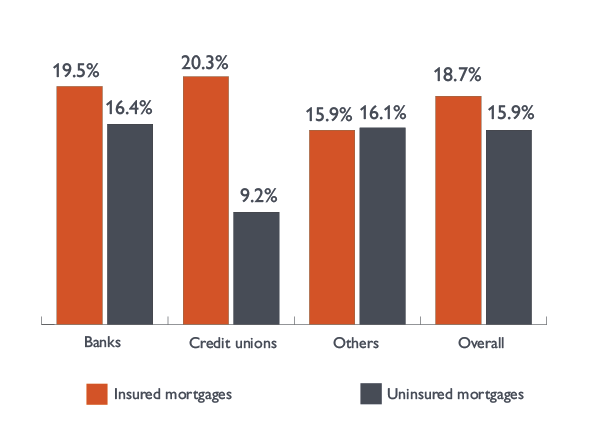
Figure 3. Share of balance in deferral for insured and uninsured mortgages varied by lender group
Insured mortgages Uninsured mortgages
Banks 19.5% 16.4%
Credit unions 20.3% 9.2%
Others 15.9% 16.1%
Overall 18.7% 15.9%

Source: CMHC calculations using Equifax Canada data

The majority of consumers with mortgages held credit card accounts. Many of them also held:

  • personal lines of credit (LOCs)
  • auto loans
  • home equity lines of credit (HELOCs)

The concurrent deferrals in both mortgage and non-mortgage consumer debt indicate the severity of the financial difficulties faced by these borrowers. In figure 4,

  • for credit card debt held by consumers3 who deferred mortgages, 17.3% of the outstanding credit card balance was in deferral.
  • for HELOCs held by consumers4 who deferred mortgages, 21.2% of the outstanding HELOC balance was in deferral.

The deferrals in non-mortgage consumer debt were lower for people who did not defer mortgage payments or did not have a mortgage.

Figure 4. Share of non-mortgage consumer debt balance in deferral was higher for consumers who deferred mortgages than those who did not
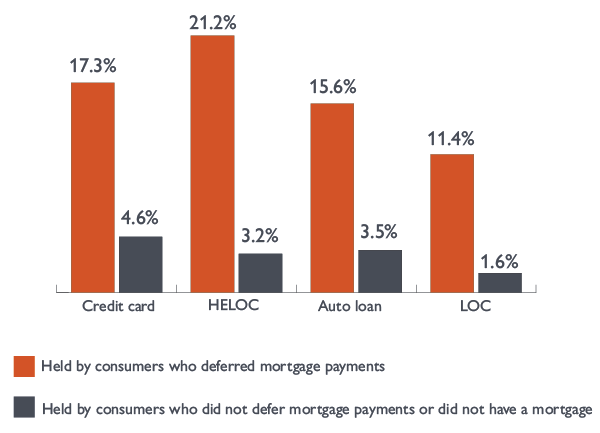
Figure 4. Share of non-mortgage consumer debt balance in deferral was higher for consumers who deferred mortgages than those who did not
Held by consumers who deferred mortgage payments Held by consumers who did not defer mortgage payments or did not have a mortgage
Credit card 17.3% 4.6%
HELOC 21.2% 3.2%
Auto loan 15.6% 3.5%
LOC 11.4% 1.6%

Source: CMHC calculations using Equifax Canada data

As at March 31, 2021, the total mortgage balance in deferral had decreased by 95.9% from its peak in June 2020. The total non-mortgage consumer debt balance in deferral had decreased by 96.5% during the same period.


Footnotes

  1. CMHC did not access or receive personal identifiable information on individuals in producing this report. All figures are sourced from Equifax Canada unless otherwise stated. Unless otherwise noted, dollars are not adjusted for inflation. Equifax data is as reported to that credit rating agency. The data may be revised at a later date due to Equifax data updates.
  2. In the Equifax data, the “other” group includes other monolines, personal finance companies, sales finance companies and all other financial services companies not already captured.
  3. The consumers were primary holders of both the mortgage and the national credit card accounts.
  4. The consumers were primary holders of both the mortgage and the HELOC accounts.
Previous Consumer Credit Scores and Mortgage Deferrals

Was this page relevant to your needs?

Thank you for your feedback!

How Can We Help?

What could we improve?

Please select all that apply.
Note: You will not receive a reply. Don't include personal information.

Google Captcha Loader

How Can We Help?

Report a Bug

Please describe the problem.

Google Captcha Loader

Thank you. Your feedback has been submitted.

Date Published: June 24, 2021

By Topic

  • Professionals
    • Project funding and mortgage financing
    • Housing markets data and research
    • Industry innovation and leadership
    • Events and speakers
  • Consumers
    • Home buying
    • Owning a home
    • Renting a home

About Us

  • CMHC's Story
  • Management and Governance
  • Our Partners
  • Corporate Reporting
  • Contact Us
  • Careers

More

  • CMHC Housing Updates
  • CMHC Library
  • Housing Observer
  • Media Newsroom
  • CMHC and Accessible Housing
  • CMHC on Twitter
  • CMHC on LinkedIn
  • CMHC on Facebook
  • CMHC on Instagram
  • CMHC on YouTube
Privacy Policy    |    Terms and Conditions    |    Transparency    |    Accessibility Plan    |    Accessibility Feedback     Canada Mortgage and Housing Corporation (CMHC) ©2026 
Canada
loader icon