Professionals Consumers Housing Observer About
Skip to content
CMHC Home Canada Mortgage
and Housing Corporation
  • FR
  • Sign in photo Sign In
  • Professionals
  • Consumers
  • Housing Observer
  • About
FR
  • The Housing Observer
  • Small-scale infill, big impact: How it adds to housing supply in Canada
  • Save
  • Share

Small-scale infill, big impact: How it adds to housing supply in Canada

Housing supply has struggled to keep pace with demand across Canada. In response, many cities are introducing zoning changes to support small-scale infill, speed up approvals and encourage more housing. This CMHC analysis finds that small-scale infill is becoming a more important source of housing supply. How much it adds will depend on zoning changes and financial viability.

September 22, 2026

Key Findings

What counts as small-scale infill?

In this analysis, we build on a recent CMHC report on “missing middle” housing in Canada’s largest markets. Here, we take a closer look at small-scale infill, a type of housing built within existing neighbourhoods. We define small-scale starts as:

  • buildings with 2 to 8 units
  • accessory dwelling units

In 2025, small-scale infill is estimated to account for
1 out of every 10 housing starts in Canada.

What does infill development look like in Canada?

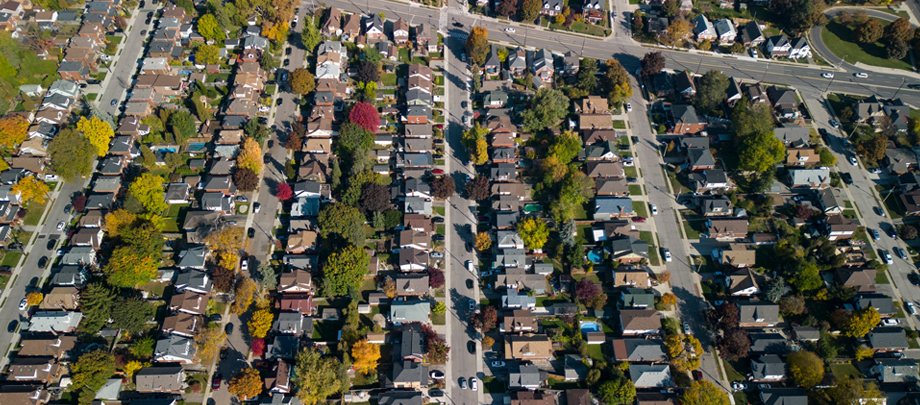
This analysis combines housing starts data with historical satellite imagery to identify which projects are built on infill sites versus undeveloped land. This approach helps better track how much new housing is built within existing neighbourhoods.

Most new housing in Canada is built through infill rather than on undeveloped land. In 2025, about 6 in 10 new homes were built on previously developed sites (Figure 1).

Between 2016 and 2025, there was a modest 5-percentage-points shift away from building on undeveloped land. This trend likely reflects:

  • limited land available for new development in major urban areas
  • policies that support building more homes in existing neighbourhoods

In practice, this means more apartments and other multi-unit housing are being built on land that was previously developed at lower density.


Figure 1: Estimated Share of New Housing Starts in Canada (%) — Infill Versus Undeveloped Land

Source: CMHC Starts and Completions Survey, NRCan Land Cover of Canada.

Estimated Share of New Housing Starts in Canada (%) – Infill Versus Undeveloped Land
Year Undeveloped Land Infill
2016 45.5 54.5
2017 44.92 55.08
2018 41.22 58.78
2019 39.96 60.04
2020 39.82 60.18
2021 41.34 58.66
2022 42.13 57.87
2023 38.29 61.71
2024 41.71 58.29
2025 39.83 60.17

Small-scale infill is growing, even as housing gets denser overall

Looking at different building sizes, 2 trends stand out:

  1. new housing is becoming denser in all locations, and
  2. ground-oriented homes make up a smaller share of new construction (Figure 2)

This is especially the case for single-detached housing starts, which have fallen since 2016.

The outlier within ground-oriented housing is small-scale infill. Its share of total housing starts was falling until about 2023, before rising sharply to surpass 2016 levels.

The timing of this reversal coincides with the launch of the Housing Accelerator Fund, as well as municipal and provincial reforms, such as Bill 23 in Ontario, and Bill 44 in British Columbia. Together, these changes allowed more small-scale infill housing to be developed on lots that historically contained a single home.

In 2025, small-scale infill accounted for nearly 1 out of every 10 starts nationwide.

Figure 2: Estimated Indexed Share of Housing Starts in Canada (%) by Dwelling Type and Location

Figure 2a: Starts From 9+ Unit Structures

Source: CMHC Starts and Completions Survey, NRCan Land Cover of Canada.

Notes: Small-scale is defined as housing with 2 to 8 units, as well as accessory dwelling units and their equivalent forms. Shares of total starts for each dwelling type and location are indexed to 100 in 2016. The 8-unit threshold reflects, in part the upper bound of as-of-right zoning. Projects with 9 or more units are predominantly apartments with common corridors, although a small number of larger row or townhomes may be included. In practice, row and townhouse developments tend to drop off sharply after about 8 units.

Starts From 9+ Unit Structures
Year Large (9+) Undeveloped Land Large (9+) Infill
2016 100.00 100.00
2017 104.91 100.97
2018 113.02 117.38
2019 124.01 128.68
2020 135.03 128.93
2021 136.14 124.17
2022 150.83 128.99
2023 148.18 148.36
2024 162.52 137.53
2025 173.86 141.25

Figure 2b: Starts from 1–8 Unit Structures

Source: CMHC Starts and Completions Survey, NRCan Land Cover of Canada.

Notes: Small-scale is defined as housing with 2 to 8 units, as well as accessory dwelling units and their equivalent forms. Shares of total starts for each dwelling type and location are indexed to 100 in 2016. The 8-unit threshold reflects, in part the upper bound of as-of-right zoning. Projects with 9 or more units are predominantly apartments with common corridors, although a small number of larger row or townhomes may be included. In practice, row and townhouse developments tend to drop off sharply after about 8 units.

Starts From 1 to 8 Unit Structures
Year Small-Scale Undeveloped Land Small-Scale Infill Single Detached Undeveloped Land Single Detached Infill
2016 100.00 100.00 100.00 100.00
2017 106.70 110.14 91.90 95.53
2018 95.31 102.94 77.64 90.03
2019 97.14 103.47 66.09 73.71
2020 93.51 95.77 62.01 79.01
2021 89.37 92.61 70.05 80.79
2022 88.43 82.65 66.91 70.95
2023 84.72 78.51 53.44 57.96
2024 95.30 94.83 56.22 47.43
2025 84.80 110.73 47.84 42.38

At the same time, construction of larger buildings with 9 or more units have grown in prominence. In 2016 they comprised 42% of total starts, rising to 63% by 2025.

This demonstrates that densification is happening at scale, including on previously undeveloped land. Multiunit housing is playing a central role in driving new supply by concentrating multiple dwellings within single developments.

As-of-right zoning changes support small-scale infill

A growing number of Canadian cities have introduced zoning changes that allow more homes within existing neighbourhoods. “As-of-right” refers to development that complies with existing zoning permissions and can proceed without additional council approval or rezoning.

This can take many forms. Edmonton, for example, now allows builders to construct up to 8 units on a typical residential lot. Vancouver and Toronto have also adopted similar policies as-of-right.

In these 3 cities, small-scale infill has accounted for a growing share of housing starts (Figure 3). Following zoning reforms in 2023, the estimated number of new starts of this type increased several-fold in the first 2 years.

Much of this redevelopment occurred in neighbourhoods with older homes, close to the downtown core.

Figure 3: Small-Scale Infill Share of Housing Starts in Toronto, Vancouver and Edmonton

Source: CMHC Starts and Completions Survey, NRCan Land Cover of Canada.

Small-Scale Infill Share of Housing Starts in Toronto, Vancouver and Edmonton
Year Toronto Edmonton Vancouver
2016 1.36 10.22 4.37
2017 4.25 11.45 7.51
2018 1.6 13.85 5.14
2019 1.78 10.86 4.82
2020 0.68 9.74 10.75
2021 0.96 11.37 10.97
2022 1.35 9.69 20.7
2023 0.62 9.95 13.22
2024 2.13 14.19 12.61
2025 6.45 23.28 18.07

Where small-scale infill is growing fastest

CMHC’s analysis suggests that Metro Vancouver is a leader in small-scale redevelopment when measured relative to its existing stock of detached homes. The City of Vancouver is estimated to have one of the highest redevelopment rates in 2025, at nearly 1%. Nearby Metro Vancouver municipalities also show high levels of activity.

Edmonton and Calgary have also seen strong growth in small-scale infill. As shown in Figure 3, Edmonton had one of the highest shares of housing starts coming from small-scale infill in 2025, with more than 1 in 5 new homes built through this form of development.

This reflects both Edmonton’s large stock of detached homes and strong uptake of its more permissive zoning framework.

Uptake has been slower in Ontario overall, partly reflecting weaker housing starts in recent years. However, in places like Toronto, small-scale infill starts have still increased even during an overall slowdown.

Suburban areas with recently built housing show lower potential, as redevelopment is less likely where dwellings are newer and acquisition costs are higher.

Implications for housing supply

Small-scale infill is emerging as an important source of ground-oriented homes in Canada. This is happening even as overall construction trends shift toward larger multi-unit buildings.

Recent zoning changes are helping enable more “missing middle” housing forms in established neighbourhoods. Uptake, however, will depend on whether projects are financially viable for those delivering them.

Sign up to get regular updates on Canada’s housing industry sent to your inbox.

Was this page relevant to your needs?

Thank you for your feedback!

How Can We Help?

What could we improve?

Please select all that apply.
Note: You will not receive a reply. Don't include personal information.

Google Captcha Loader

How Can We Help?

Report a Bug

Please describe the problem.

Google Captcha Loader

Thank you. Your feedback has been submitted.

Discover related content using the tags below:

  • Research
  • Housing Supply
  • New Construction
  • Housing Market
  • Rental Housing
  • Innovation
Date Published: September 22, 2026
Save Icon

SAVE TO MY FOLDER

Small-scale infill, big impact: How it adds to housing supply in Canada

SAVE
Close this Window   |   Manage my Folder
Save Icon

SAVE TO MY FOLDER

Small-scale infill, big impact: How it adds to housing supply in Canada

Done Done!
Close this Window   |   Manage my Folder
Share icon

Share via

  • Facebook
  • LinkedIn
  • Mail
  • print
  • CopyLink

SuccessCopyLinkVersionLink copied

Share icon

Share via

  • Facebook
  • LinkedIn
  • Mail
  • print
  • CopyLink

SuccessCopyLinkVersionLink copied

share icon

Mail-blue Share via Email

Did You Know?

You can include an email signature?

Register | Sign In

×
Google Captcha Loader
share icon

Mail-blue Share via Email

Done Done!
Close this window

By Topic

  • Professionals
    • Project funding and mortgage financing
    • Housing markets data and research
    • Industry innovation and leadership
    • Events and speakers
  • Consumers
    • Home buying
    • Owning a home
    • Renting a home

About Us

  • CMHC's Story
  • Management and Governance
  • Our Partners
  • Corporate Reporting
  • Contact Us
  • Careers

More

  • CMHC Housing Updates
  • CMHC Library
  • Housing Observer
  • Media Newsroom
  • CMHC and Accessible Housing
  • CMHC on Twitter
  • CMHC on LinkedIn
  • CMHC on Facebook
  • CMHC on Instagram
  • CMHC on YouTube
Privacy Policy    |    Terms and Conditions    |    Transparency    |    Accessibility Plan    |    Accessibility Feedback     Canada Mortgage and Housing Corporation (CMHC) ©2026 
Canada
loader icon